A dance floor that is sized and positioned correctly serves both the guest experience and the logistical needs of the event. One that is too small creates congestion during peak dancing periods and limits how many guests can participate comfortably. One that is too large consumes floor space needed for dining tables, lounge seating, and circulation paths. Getting the size right requires an honest assessment of guest count, venue dimensions, and how the floor relates to the surrounding layout.
Positioning is equally important. The dance floor should be placed so that it remains visible from all major seating areas, accessible without requiring guests to navigate through the dining section, and clear of primary service lanes. Its location within the venue shapes the flow of the entire reception, influencing how guests transition between dining, socializing, and dancing throughout the evening.
Aligning The Floor With Surrounding Rental Elements
Table and chair rentals must be arranged in relation to the dance floor rather than independently of it. Dining tables positioned too close to the floor's edge restrict movement and create noise disruption during seated courses. Tables placed too far away disconnect the dining area from the energy of the celebration. Finding the right balance between proximity and separation supports a reception environment where both dining and dancing feel intentional and connected.
Lounge groupings and bar placement also influence how the dance floor functions within the space. Bar rentals positioned adjacent to the dance floor keep guests close to the celebration without obstructing the floor itself. Furniture rentals including sofas and armchairs placed along the perimeter give guests a comfortable vantage point from which to watch and participate in the celebration at their own pace.
Tented Venues And Outdoor Dance Floor Installations
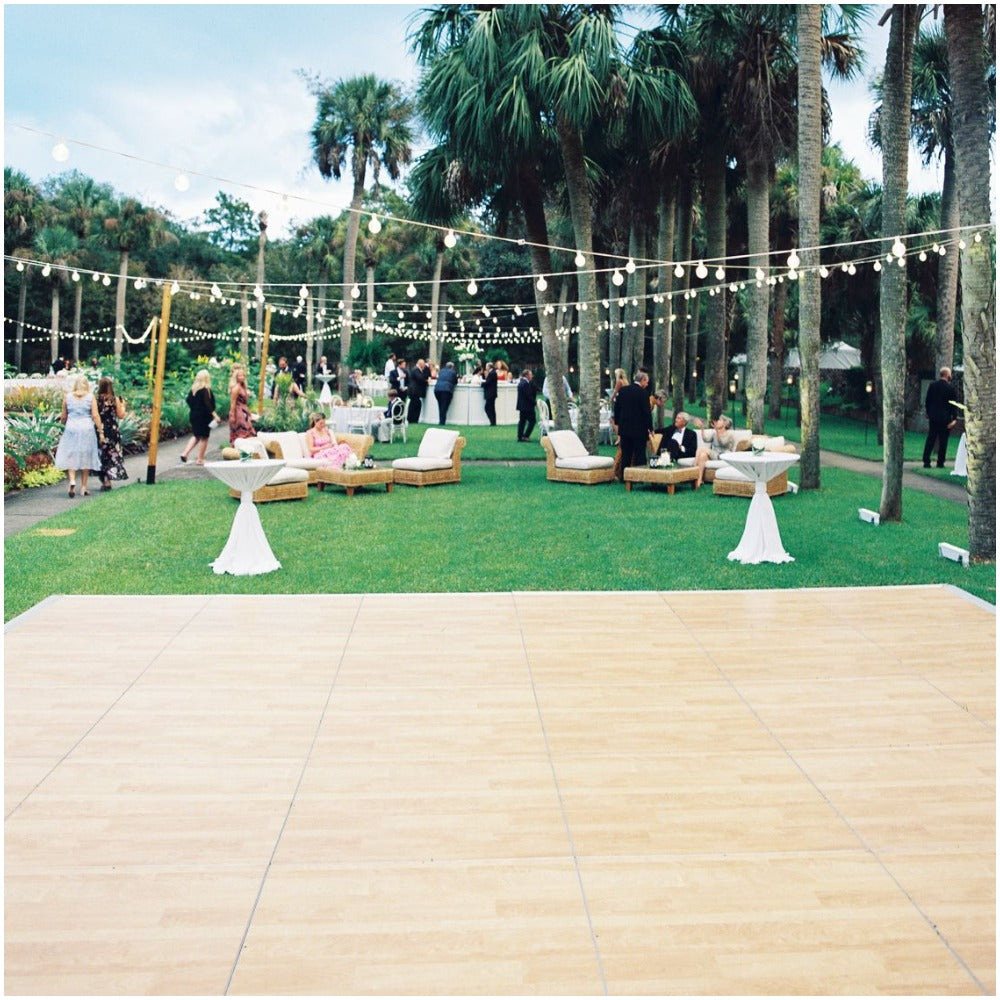
Outdoor events and tented receptions introduce additional considerations for dance floor installation. Uneven terrain, soft ground, and temperature fluctuations all affect how the floor performs and how safely guests can use it throughout the evening. Planning for these conditions before installation day is essential for a surface that remains stable and visually consistent from the first dance through the last song.
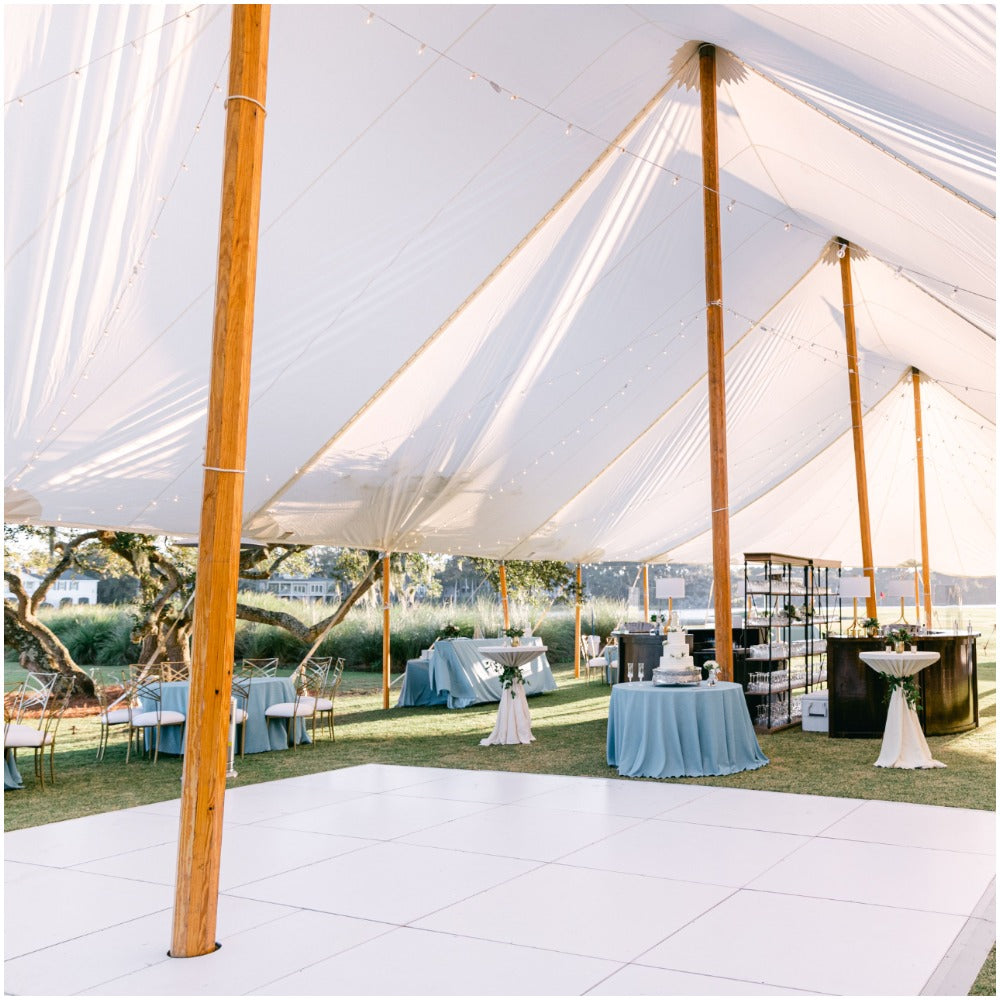
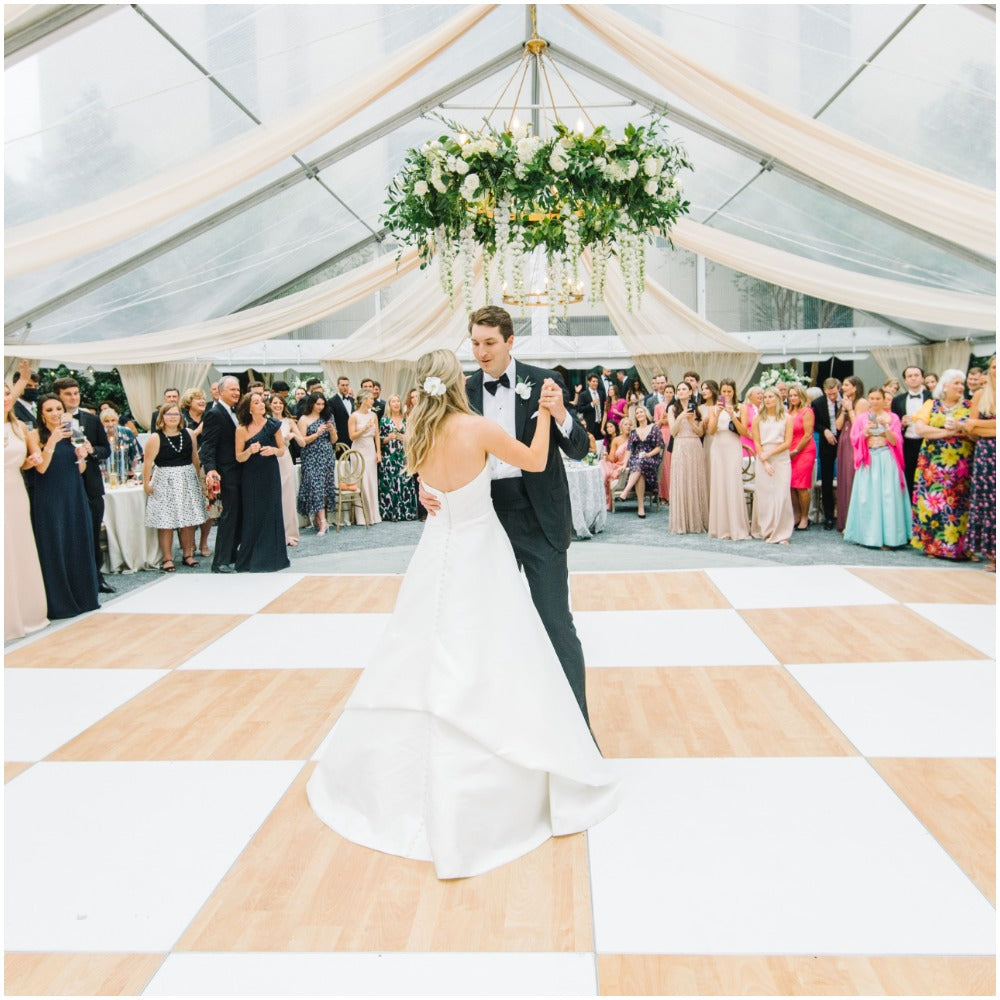
Tent rentals provide the overhead structure within which the dance floor is installed. The tent footprint must be large enough to accommodate the floor, surrounding dining tables, lounge groupings, bar placement, and adequate circulation between each zone. Tent orientation also affects the visual impact of the dance floor, particularly for styles with graphic patterns or reflective finishes that respond to natural and ambient light.
Preparing The Ground Beneath The Floor
On grass or uneven outdoor surfaces, proper ground preparation is essential before the dance floor panels are installed. A level base prevents shifting during use and maintains consistent panel alignment across the full floor area. Transition edges between the dance floor and surrounding ground surfaces should be smooth and clearly marked to support safe movement for guests in formal footwear.
Our sales professionals assess ground conditions, drainage patterns, and surface stability before confirming installation plans. Addressing these factors during the planning stage prevents disruptions on the day of the event and supports a floor that performs reliably across the full duration of the celebration.