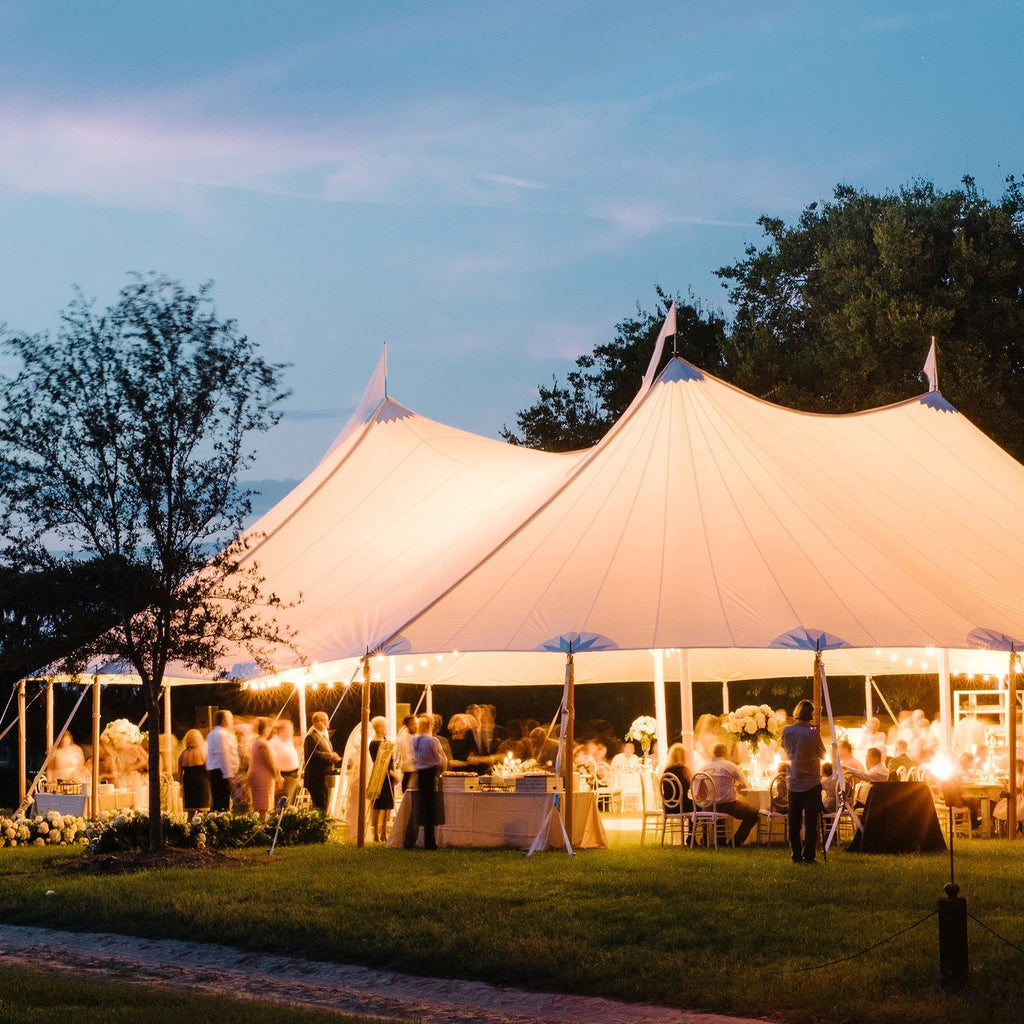
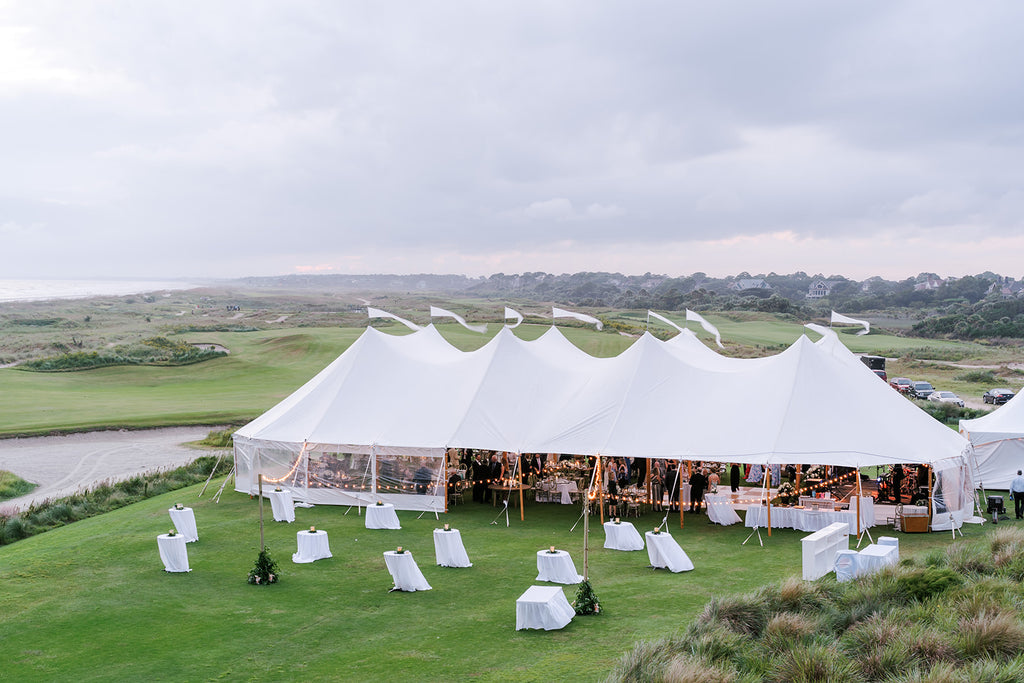
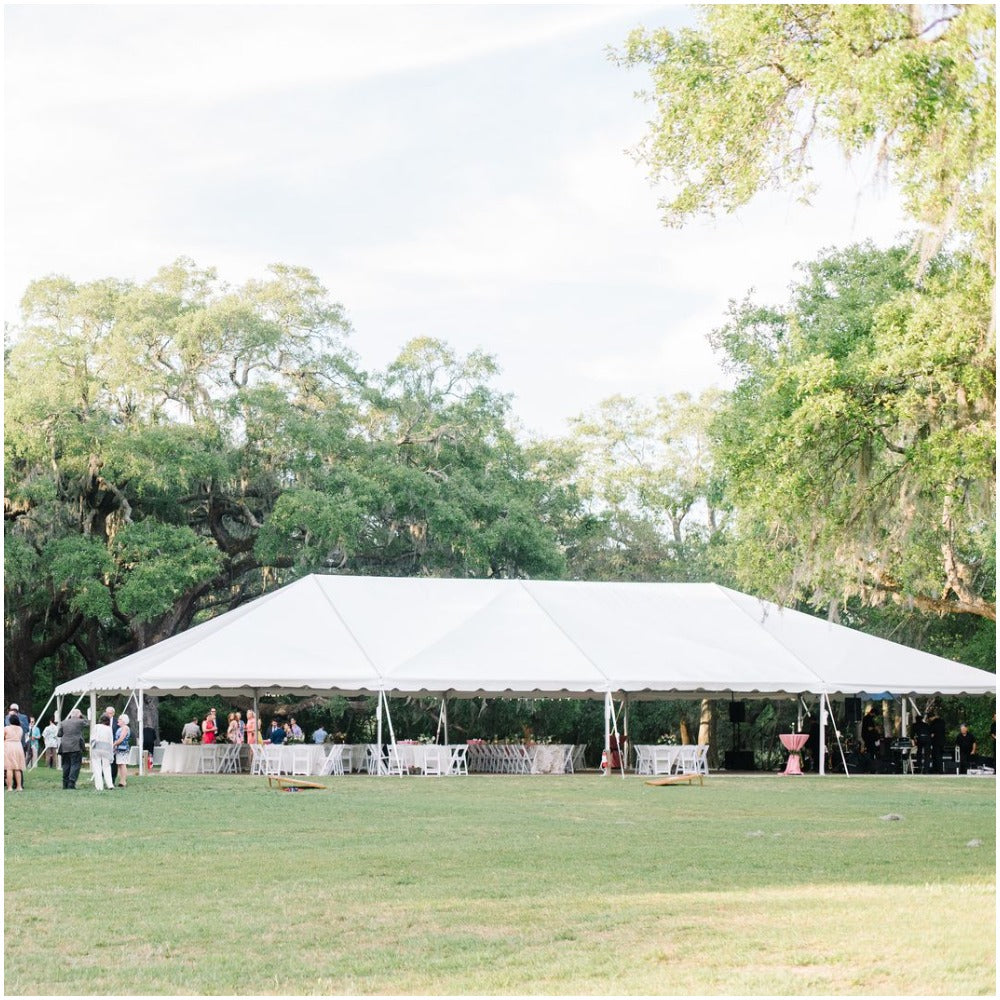
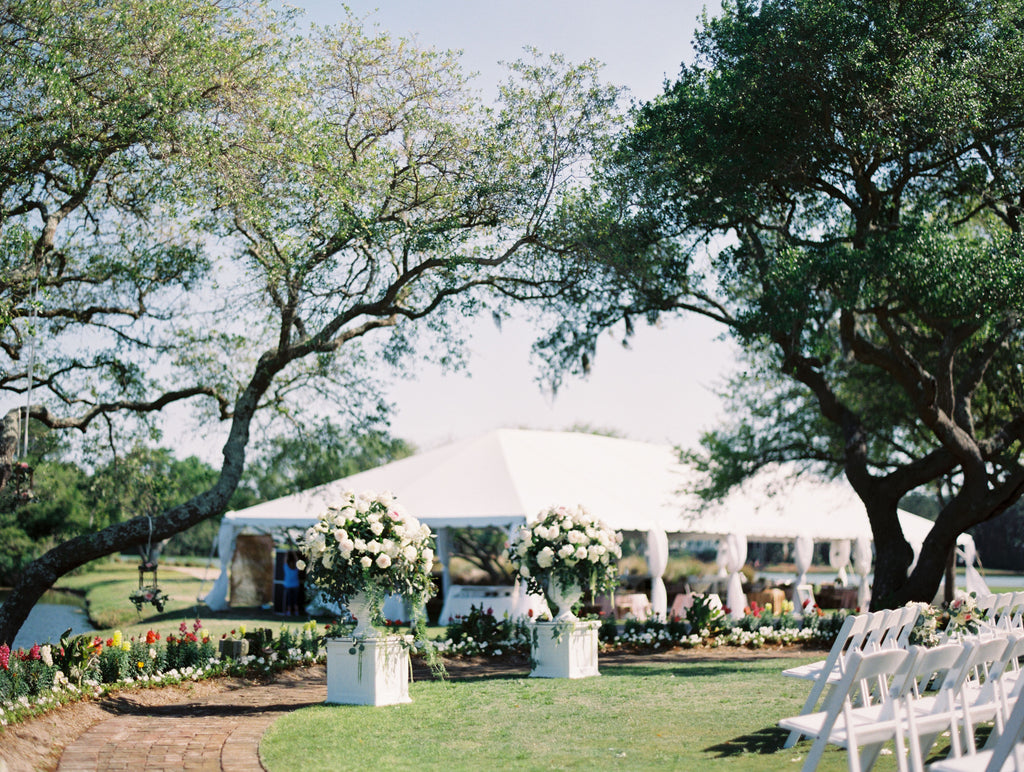
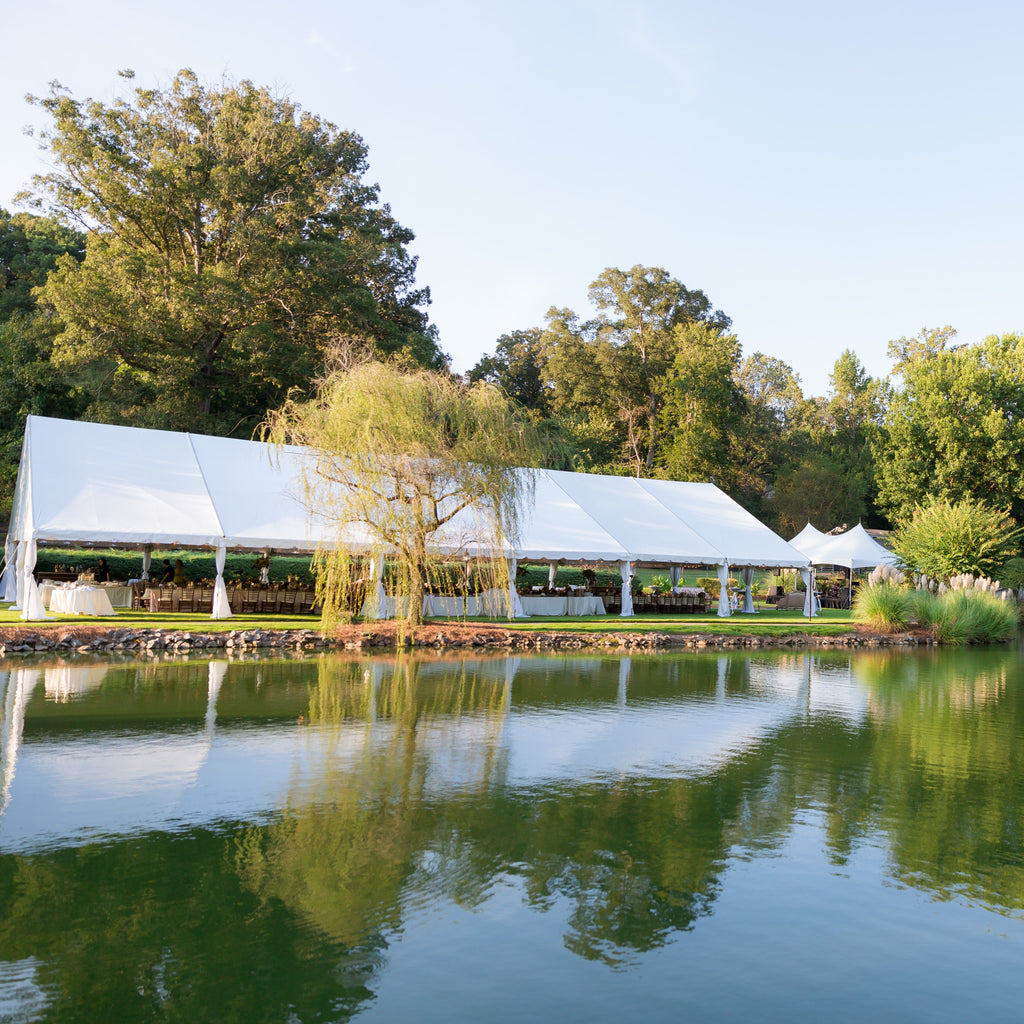
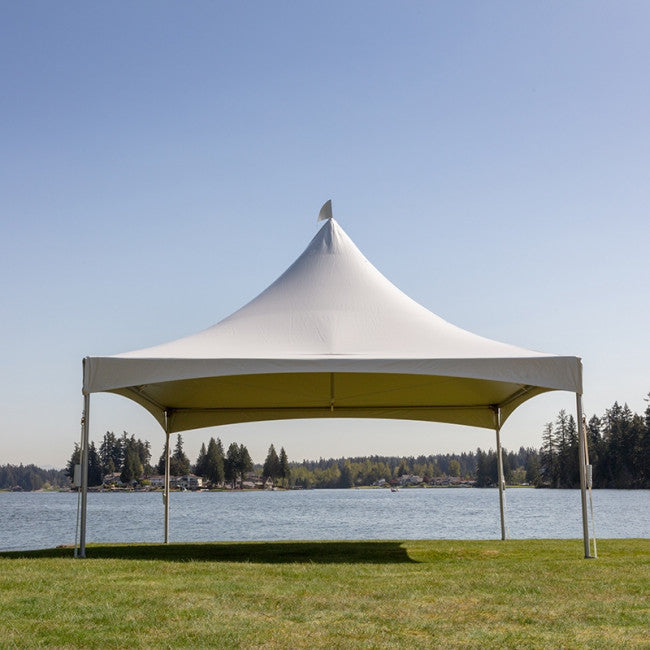
Selecting a tent style is only the first step. How the interior of that tent is arranged determines how smoothly the ceremony and reception unfold. Seating rows, staging placement, aisle widths, lounge groupings, and bar positioning all need to be mapped within the tent's dimensions before installation begins.
Table and chair rentals form the structural base of the interior layout. Ceremony seating requires consistent row spacing to maintain clear aisle access and unobstructed sightlines toward the stage. Reception tables require a different configuration entirely, one that supports dining, conversation, and service movement simultaneously. Planning for both within the same tent footprint requires careful coordination.
Maintaining Clear Sightlines And Circulation Paths
Every guest seated under the tent should have a clear view of the stage and podium. Row alignment, chair spacing, and aisle placement must account for both the tent's structural supports and the position of the stage platform. Blocked sightlines reduce the quality of the ceremony experience and can create frustration for families who have traveled significant distances to attend.
Circulation paths are equally important. Aisles between seating sections should allow guests to move comfortably without disrupting adjacent rows. Service lanes for catering staff during the reception must remain clear of lounge furniture and bar placement to support efficient movement across the full event timeline.
Flooring That Stabilizes The Interior Environment
Outdoor graduation venues often present uneven terrain, soft grass, or surface conditions that complicate furniture placement and guest movement. Staging and flooring rentals provide level surfaces beneath the tent that stabilize tables, chairs, and staging components while creating a safer walking environment for guests and graduates in formal attire.
Flooring also contributes to the overall visual presentation of the space. A clean, level surface beneath coordinated tablescapes and specialty seating communicates preparation and attention to detail that reflects the significance of the occasion.
Weather Preparedness For Outdoor Graduation Ceremonies
Spring and early summer graduation seasons across the Southeast bring a range of weather conditions. Heat, humidity, afternoon thunderstorms, and variable wind are common throughout South Carolina, Georgia, Florida, Tennessee, and Alabama during peak graduation months. A well-specified tent installation accounts for these variables before they become day-of challenges.
Sidewall configurations allow the tent perimeter to be opened or closed depending on wind and rain conditions. Full sidewalls provide maximum weather protection during unexpected rain, while open or partial configurations support airflow during warm, humid afternoons. Climate solutions such as fans and portable heating units can be integrated into the tent setup to maintain comfortable temperatures throughout both the ceremony and the reception.
Anchoring And Structural Considerations For Outdoor Sites
Tent anchoring requirements vary by surface type, tent style, and anticipated weather conditions. Frame tents can be weighted rather than staked on hard surfaces, while pole tents require staking in soft ground with adequate clearance from underground utilities. Each installation site is assessed in advance to determine the appropriate anchoring method and confirm that the structure meets safety requirements.
Wind orientation is also a factor in tent placement. Positioning the tent to reduce direct wind exposure minimizes stress on the structure and improves comfort for guests seated near the perimeter. Our sales professionals review site conditions, local weather patterns, and venue access requirements before finalizing installation plans.